

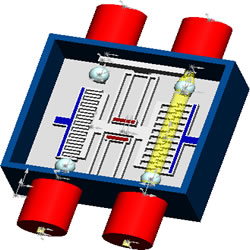
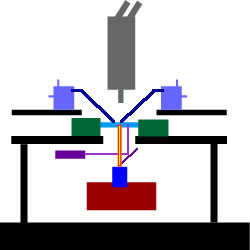
uBricks Research is a Microengineering and Management Consulting firm offering μBricks® Consulting Services, a suite of engineering and advisory services for the microsystems, microelectronics, sensors and device packaging communities. We support all aspects of technology and product development using a centrally managed global innovation network of over 3000 scientists, engineers and management professionals […]
Featured:
-

uBricks Research is a Microengineering and Management Consulting firm offering μBricks® Consulting Services, a suite of engineering and advisory services for the microsystems, microelectronics, sensors and device packaging communities. We support all aspects of technology and product development using a centrally managed global innovation network of over 3000 scientists, engineers and management professionals […]
-
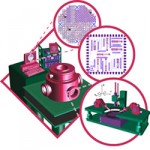
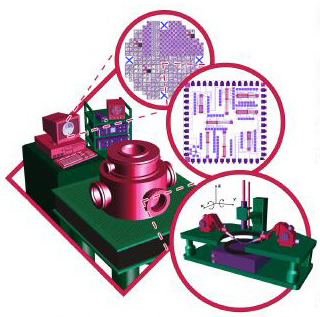
We provide contract R&D services in areas such as heterogeneous integration, microsystems packaging, custom equipment development, reliability assessment, evolutionary automation and related technical fields.
We also provide studies and assessments in support of design for manufacturing, outsourced fabrication, EMI/RF compatibility, ionizing radiation effects and system reliability. We are […]
-
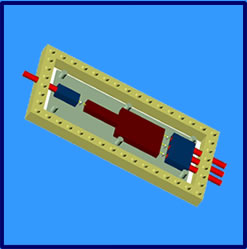
We offer µBricks® product development services based on our Microbricks™ architecture, a growing array of integrated microsystems that are modular, interoperable and mass producible for cost-effective and reliable integration of complex products as part of complete solutions.
Microbricks™ based solutions are thought out as architecturally centered on the package and/or the product rather than on […]
-
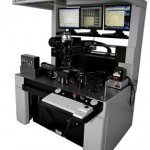
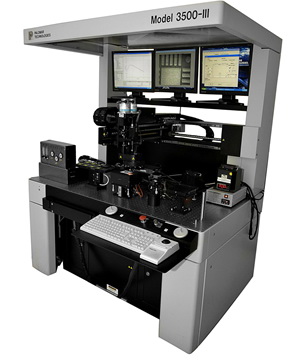
µBricks® Package-Centric Engineering Services offers a growing array of heterogeneous integration resources. We support the development of products based on heterogeneous integration of logic, RF, sensors and energy sources with emphasis on hierarchical and modular microengineering methods. We continue to develop novel assembly, testing and simulation tools; supplemented by a growing global network of […]
-
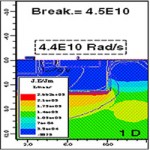
We provide design engineering services supported by a complete suite of CAD and numerical simulation tools.
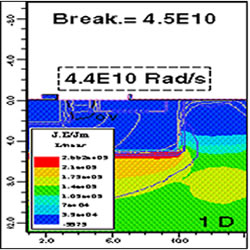
We provide Solid Modeling, FEA Analysis, Electron Device Studies and MEMS/MST Comprehensive Simulations including Reliability and Radiation Effects Studies.
We also provide RF Analysis, Optical System, Package Level Design and Simulation; and complete Circuit and Board Level Design Services.
Our internal […]
-

We offer the services of a large network of strategy, M&A and product development experts.
These consultants are distributed in over 12 countries, across most research initiatives and have hands-on management experience in industries including semiconductor equipment, microelectronics fabrication, sensors and displays, and robotics and automation.
-

We provide up-to-date analysis of public information sources and competitive assessments to semiconductor and microsystems companies, investment organizations and government agencies worldwide. We focus mainly in R&D activities in the Semiconductor and Microsystems technology spaces with services that include Patent Activity Monitoring, R&D Risk Analysis, and R&D Joint Ventures / Alliances Assessments.
We have over […]
-
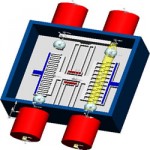
Optobricks™ is our rapid prototyping architecture for researchers and system developers creating products that would benefit from availability of integrated optical circuits.
The goal of the package-centric Optobricks™ architecture is to replace optical breadboard tables and associated components used in optics laboratories.
Our firm has developed proprietary architectures, fabrication methods and Optobricks-FAB™ , an assembly tool […]
-
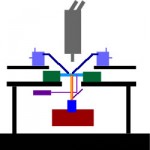
Our Optobricks™ Architecture has been designed to make possible rapid prototyping of optical circuits without using optical tables. Optobricks-FAB™ is a proprietary toolset under development for making possible rapid prototyping of optical circuits.
-

Is mass market manufacturing dead in developed countries where labor and services cost more, and where costs or regulations are higher? Accumulating empirical evidence suggests that this is the case, at least if we do not consider the many avenues that innovation provides us.
uBricks Research and others now believe it is possible to successfully compete […]


We provide contract R&D services in areas such as heterogeneous integration, microsystems packaging, custom equipment development, reliability assessment, evolutionary automation and related technical fields.
We also provide studies and assessments in support of design for manufacturing, outsourced fabrication, EMI/RF compatibility, ionizing radiation effects and system reliability. We are […]
We offer µBricks® product development services based on our Microbricks™ architecture, a growing array of integrated microsystems that are modular, interoperable and mass producible for cost-effective and reliable integration of complex products as part of complete solutions.
Microbricks™ based solutions are thought out as architecturally centered on the package and/or the product rather than on […]
µBricks® Package-Centric Engineering Services offers a growing array of heterogeneous integration resources. We support the development of products based on heterogeneous integration of logic, RF, sensors and energy sources with emphasis on hierarchical and modular microengineering methods. We continue to develop novel assembly, testing and simulation tools; supplemented by a growing global network of […]
We provide design engineering services supported by a complete suite of CAD and numerical simulation tools.
We provide Solid Modeling, FEA Analysis, Electron Device Studies and MEMS/MST Comprehensive Simulations including Reliability and Radiation Effects Studies.
We also provide RF Analysis, Optical System, Package Level Design and Simulation; and complete Circuit and Board Level Design Services.
Our internal […]
We offer the services of a large network of strategy, M&A and product development experts.
These consultants are distributed in over 12 countries, across most research initiatives and have hands-on management experience in industries including semiconductor equipment, microelectronics fabrication, sensors and displays, and robotics and automation.
We provide up-to-date analysis of public information sources and competitive assessments to semiconductor and microsystems companies, investment organizations and government agencies worldwide. We focus mainly in R&D activities in the Semiconductor and Microsystems technology spaces with services that include Patent Activity Monitoring, R&D Risk Analysis, and R&D Joint Ventures / Alliances Assessments.
We have over […]
Optobricks™ is our rapid prototyping architecture for researchers and system developers creating products that would benefit from availability of integrated optical circuits.
The goal of the package-centric Optobricks™ architecture is to replace optical breadboard tables and associated components used in optics laboratories.
Our firm has developed proprietary architectures, fabrication methods and Optobricks-FAB™ , an assembly tool […]
Is mass market manufacturing dead in developed countries where labor and services cost more, and where costs or regulations are higher? Accumulating empirical evidence suggests that this is the case, at least if we do not consider the many avenues that innovation provides us.
uBricks Research and others now believe it is possible to successfully compete […]
US Congress passed the Leahy-Smith America’s Invent Act of 2011 on September 2011. These Act represents the most extensive review of the US Patent System in over 20 years. There are clear effects on entrepreneurs and small companies in several favorable and unfavorable ways.

Join our 50+ Global Research and Consulting Networks to participate solving some of the most interesting business and product development challenges of our time.
Follow Us:

 3D Packaging
- Madhya Pradesh Bets $655M on India’s First 3D AI Chip Packaging Facility - Tech Times October 23, 2026
- Qnity Expands Advanced Packaging Platform for AI and 3D Semiconductor Systems - citybiz August 25, 2026
- Materials Shaping the Future of Advanced Semiconductor Packaging - IDTechEx July 7, 2026
- Key Technology Trends to Watch in Advanced Semiconductor Packaging - IDTechEx July 1, 2026
- Thermoreflectance and Solving the Thermal Puzzle in 3D Packaging - I-Connect007 June 11, 2026
Heterogeneous Integration
- Bull of the Day: ASE Technology Holding Co (ASX) - TradingView October 16, 2026
- SQ Advanced Interconnect IPO is Coming in Malaysia Early 2027 - Moomoo October 15, 2026
- System In Package Advanced Integration Market Size [2034] - Fortune Business Insights October 5, 2026
- IndieSemiC and Kaynes Semicon Partner to Boost Domestic Chip Manufacturing - Electronics For You BUSINESS September 21, 2026
- IndieSemiC, Kaynes Semicon sign MoU for strategic OSAT collaboration - ET Manufacturing September 19, 2026
Flip Chip
- Bull of the Day: ASE Technology Holding Co (ASX) - TradingView October 16, 2026
- SQ Advanced Interconnect IPO is Coming in Malaysia Early 2027 - Moomoo October 15, 2026
- System In Package Advanced Integration Market Size [2034] - Fortune Business Insights October 5, 2026
- IndieSemiC and Kaynes Semicon Partner to Boost Domestic Chip Manufacturing - Electronics For You BUSINESS September 21, 2026
- IndieSemiC, Kaynes Semicon sign MoU for strategic OSAT collaboration - ET Manufacturing September 19, 2026
- Advanced Packaging Changes The Rules For Semiconductor Health And Performance Management - Semiconductor Engineering September 14, 2026
- Synopsys and A*STAR IME to co-develop advanced semiconductor packaging tools in Singapore - CRN Asia September 11, 2026
- Synopsys and A*STAR IME Join Forces to Accelerate Innovation for Advanced Semiconductor Packaging - Bisinfotech September 9, 2026
- Why Is the Semiconductor Packaging Market Becoming - openPR.com August 10, 2026
- Amkor shifts SiP work to Vietnam to make room for AI packaging in Korea - ET CIO SEA July 31, 2026
MEMS Foundries
- MEMS industry: AI drives a growth resurgence - Yole Group July 15, 2026
- From IPO to expansion: Silex’s next growth chapter - Yole Group July 6, 2026
- Global Semiconductor Company Teledyne MEMS Is Investing $20 Million to Expand Its Edmonton Facility - Culture Alberta June 24, 2026
- MEMS Drives Photonic and Optoelectronic Performance - EE Times January 13, 2026
- Xiver aims to become EU leader in MEMS for high-tech applications - IO+ July 12, 2025
Energy Harvesting
- Graphene harvester taps power-line radiation to run battery-free temperature sensor - Bioengineer.org October 27, 2026
- House-Sized Buoys Harvest 90% of Ocean Wave Energy - Thomasnet October 26, 2026
- Silk Gels Tuned Across Scales Stretch From Soft Sensors to Energy Harvesters - Bioengineer.org October 26, 2026
- Are aliens harnessing a massive energy source from space? - Vietnam.vn October 26, 2026
- Bio-hybrid harvester generates electricity from human cells - New Atlas October 23, 2026
Evolutionary Automation
- Progression without progress - Science | AAAS May 21, 2026
- Smartstream: The Evolutionary Leap from Process Automation to Full Autonomy - FF News April 20, 2026
- An industrial automated laboratory for programmable protein evolution - Nature November 19, 2025
- AlphaEvolve: A Gemini-powered coding agent for designing advanced algorithms - Google DeepMind May 14, 2025
- An automated parallel genetic algorithm with parametric adaptation for distributed data analysis - Nature March 29, 2025
- Growth-coupled continuous directed evolution by MutaT7 enables efficient and automated enzyme engineering - ASM Journals March 27, 2025
- Integrating protein language models and automatic biofoundry for enhanced protein evolution - Nature February 11, 2025
- Automated in vivo enzyme engineering accelerates biocatalyst optimization - Nature April 24, 2024
- Agent swarms – an evolutionary leap in intelligent automation - CIO January 24, 2024
- The Fourth Industrial Revolution: Evolution of communication and machinery - TRENDS Research August 28, 2023